
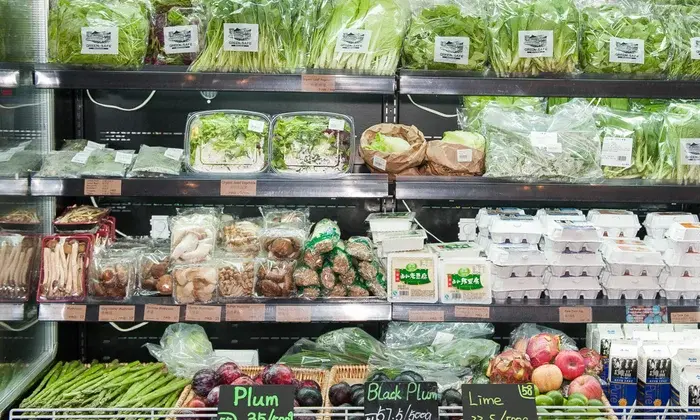
In new experimental research on Chinese consumers, pairing altruistic environmental appeals with gain framing (what we all gain) increases intentions to buy organic food. When ads use self-benefit appeals, loss framing (what you personally lose) performs better. Processing fluency and self-construal help explain why the matches work. This pattern is becoming an important factor in the growth of China’s Organic Food Market.
Table of Contents
What Hub of China Is Seeing on the Ground?
What does this mean for Marketers of Organic Food in China?
Creative Checklist You Can Hand Your Team
What did the New Study Test?
Researchers ran three 2×2 experiments across three categories: organic milk, wine, and pork, using picture-based ad stimuli. Each ad combined:
- Appeal: altruistic environmental benefit vs. self-interested personal benefit
- Frame: gain vs. loss
They recruited Chinese consumers online and measured purchase intention, plus psychological mechanisms such as processing fluency (how easy an ad is to mentally process) and self-construal (how people see themselves as more independent “me-focused” or interdependent “we-focused”).
Core finding:
- Altruistic appeal + gain frame → higher purchase intent
- Self-interested appeal + loss frame → higher purchase intent
In short, message fit matters more than simply “going green,” especially when connecting with the expanding audience in the Organic Food Market.
Why This Makes Sense?
Fluency: When the appeal and the frame feel naturally aligned, the ad is easier to process, and easier ads are more persuasive.
Self-construal: People with a more interdependent mindset are primed for altruistic + gain messages. Those with a more independent mindset respond better when self-interest is made salient, especially under loss framing.
What Hub of China Is Seeing on the Ground?
From Hub of China’s ongoing work on sustainable F&B and grocery choices in tier-1 and tier-2 cities:
- Clarity first: Shoppers say they respond best to simple, outcome-led green claims tied to everyday benefits such as taste, safety, and family wellbeing.
- Trust gap: Labels alone don’t close the trust gap. People want plain-language explanations and visible proof (traceability prompts, sourcing cues, third-party logos they actually recognize).
- Emotion still matters: In our 2025 “emotional economy” groups, organic choices are often justified as care for family rather than status, consistent with altruistic gain framing working well.
These insights explain why advertising plays a key role in shaping the trust and direction of the Organic Food Market.
What does this mean for Marketers of Organic Food in China?
Match the appeal to the frame
Lead with “for the environment, for our community” when you use gain language: “cleaner soil and water,” “healthier ecosystems,” “better for everyone.”
If you must use self-benefit, make the risk of loss concrete: “fewer residues,” “lower exposure,” “what you avoid if you choose organic.”
Design for processing fluency
One clear benefit per ad. Reduce jargon, keep visuals literal, and connect claim → proof → action in three steps. Use familiar icons for eco outcomes and family wellbeing.
Localise proof
Tie benefits to local farms and provincial supply chains, consumers recognise. Add QR traceability that lands on a short, scannable page: origin, certification, test snapshots.
Segment by self-construal cues
Family caretakers / interdependent cues → altruistic + gain.
Young independents / personal wellness → self-benefit + loss framed around missed health or quality advantages.
Pair the message with the moment
Altruistic-gain works well in upper-funnel and education formats.
Self-benefit-loss can be more effective near purchase or in retargeting, where urgency helps..
Creative Checklist You Can Hand Your Team
- Headline uses altruistic gain or self-benefit loss, not both.
- One hero visual showing the benefit outcome, not just a logo.
- Proof block with one trusted mark and one plain-language sentence.
- CTA anchored to the claim: “Choose organic milk for cleaner farms” vs. a generic “Shop now.”
- Landing page repeats the same frame and adds a 30-second traceability proof.
Common Pitfalls to Avoid
- Mixing frames in one unit reduces fluency.
- Overloading labels with many micro-claims.
- Abstract eco metaphors that look pretty but don’t say what changes for the shopper or community.
- Bare “green” seals without context; always give a one-line explanation.
Fast Examples
Altruistic + gain (awareness): “Organic rice helps restore healthy soils in Jiangsu. Every bag supports cleaner water for our communities.”
Self-benefit + loss (conversion): “Skip the residues. Choose certified organic grapes this week and avoid what conventional farming leaves behind.”
Such examples are now common in China’s Organic Food Market, where emotional and educational messaging work hand in hand.
Measurement Plan
- Split-test appeal × frame pairs by category.
- Track assisted and direct add-to-cart lift, not just CTR.
- Add a one-question fluency poll on the landing page: “Was this explanation clear?”
- Monitor save and share rates on Xiaohongshu posts that carry altruistic-gain vs. self-benefit-loss.
Continuous market research allows brands to refine ad messaging and understand what truly drives purchase intent in China’s Food Market.
Final Thoughts
China’s Organic Food Market is evolving fast, driven by emotional, educational, and transparent green advertising. When brands match the right message frame with the right audience, consumers feel more confident about choosing organic. As awareness and traceability grow, green ads will continue shaping how people understand and trust organic food in China.
Want to learn more about sustainable trends in China’s Food Market? Contact us today
FAQs
Q: Does this work across categories?
The experiments covered dairy, wine, and pork. Directionally, the pattern held, but always test per category and price point.
Q: What if certification awareness is low?
Keep the seal, but add one plain-language sentence and a QR to a short, visual explainer. That boosts fluency and trust.
Q: Isn’t loss framing risky?
Use it responsibly, with factual claims. It performs best closer to purchase and for personal-health benefits.
Q: How are green ads shaping China’s Organic Food Market?
Green ads are helping build consumer trust and awareness, showing how sustainability connects with everyday benefits like safety and quality.
Q: What future trends are expected in China’s Organic Food Market?
Experts expect steady growth driven by transparency, traceable supply chains, and emotional storytelling that highlights both personal and environmental benefits.