
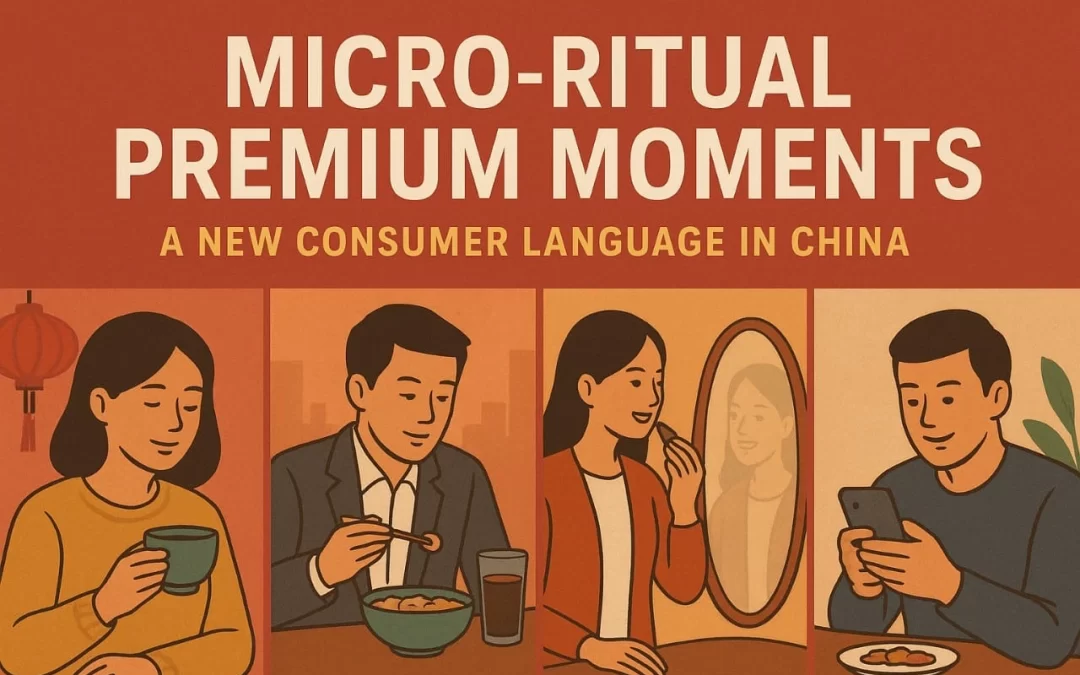
In the course of our group discussions across Suzhou and Xi’an during early May, we identified a pattern that went beyond mere buying; it was about creating a short ritual that signalled value without causing loss of control. We named this behavior micro-ritual premium moments. It occurs when consumers choose one small item that feels elevated, integrate it into their existing daily life, and then protect that moment as special.
Table of Contents
- How does the behavior present?
- What drives this pattern?
- Brand implications
- Wider significance
- Final Thoughts
- FAQs
How does the behavior present?
In one session, a 29-year-old said she allocates a specific number of minutes each evening to a cup of single-origin tea rather than a larger dessert. She described this as a pause she would not forego. In another group, a 34-year-old male respondent said he buys a “better” bottle of water when he takes the subway to work at 7 a.m. rather than skipping his gym membership. The pattern is clear. Instead of layering more indulgence over their routine, they pick an existing routine and upgrade one element, making it a brief ritual of premium.
What drives this pattern?
From the research, it became clear that consumers are increasingly budget aware and time aware. They measure cost, but they also measure cognitive load. Our workshop responses showed that the idea of buying something new felt fine, but the idea of adding something extra or creating a new habit felt heavy. This is why micro-rituals succeed. They slot into existing patterns rather than asking the consumer to build new infrastructure or change behavior. These micro-ritual premium moments reinforce that the emotional value is not extravagance but consistency, reflecting a deep consumer understanding.
Brand implications
For brands, this means looking for re-entry points into existing daily routines rather than forcing new usage occasions. If your product can replace one element of a routine with something slightly elevated, you are tapping into this behavior. For example, a skincare brand might not ask consumers to add a new night mask, but instead position a “premium nightly cleanse” that uses the same step but better ingredients and feels like a ritual. In our workshops, participants responded more positively when the upgrade was substituted rather than added.
Wider significance
The micro-ritual premium moments link back to other shifts in Chinese consumer behaviour. It aligns with the pick-your-premium strategy we saw in October 2025, where consumers allocate premium spend to a few categories and economise elsewhere. It also connects to the closed-circle decision-making where the choice is vetted quietly by trusted peers and only then adopted. When someone sends a recommendation for “my nightly ritual upgrade” inside a private chat, it carries deeper legitimacy than any public campaign.
Final Thoughts
In the landscape of 2025 China, true novelty is less about shiny launch and more about subtle integration. Consumers are not looking for big changes but meaningful enhancements that fit into their lives. For brands that see premium as empowerment rather than excess, this is the moment to design micro-ritual premium moments, moments rather than messages. If you want to create experiences that truly resonate with modern consumers, contact us today, and let’s build meaningful impact together.
FAQs
1. What are micro-ritual premium moments?
Small upgrades within existing routines that feel special without adding extra effort, creating a brief sense of personal reward.
2. Why are micro-rituals becoming popular in China?
Consumers want premium feelings without extra cost, time, or mental load, making them an easy everyday choice.
3. How can brands tap into this behaviour?
By elevating a step consumers already take instead of creating new routines, it ensures smoother adoption.
4. Are micro-ritual premium moments the same as indulgence?
No, indulgence adds more; micro-rituals simply upgrade what already exists, keeping the experience refined and simple.
5. What categories benefit most from this trend?
Daily-use categories like beverages, skincare, wellness, and small personal treats as they naturally fit into existing habits.