
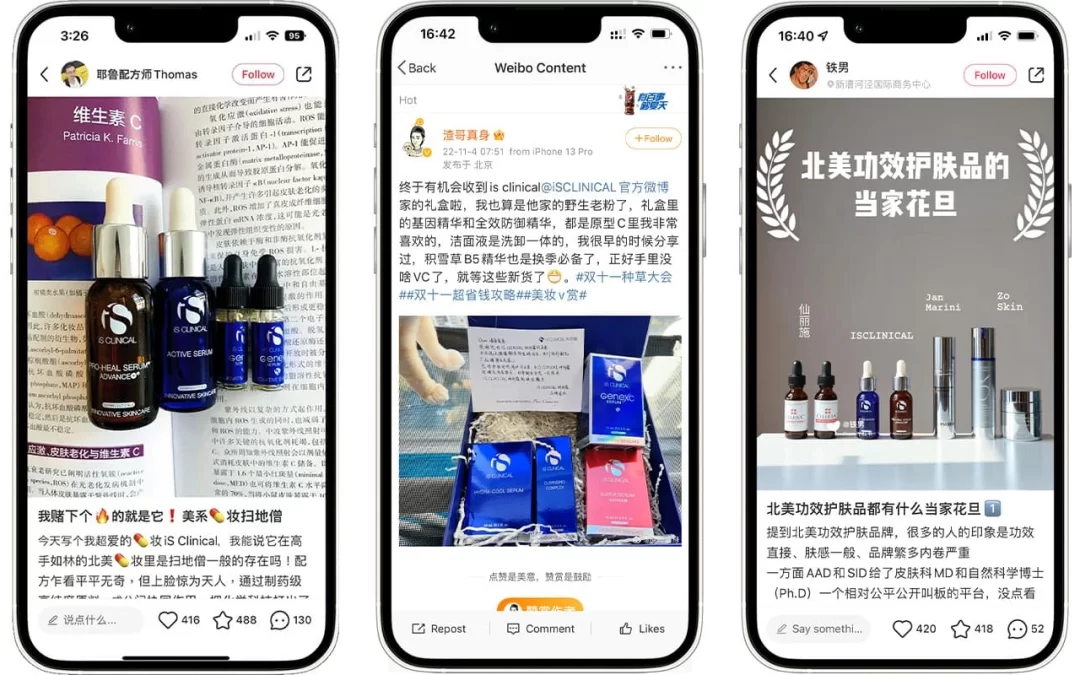
What’s changed
- Brands are moving away from top-macro KOLs alone and putting more budget into mid-tier and long-tail influencers (including KOCs), reflecting the shift in KOL and KOC dynamics in China 2025. Fashion China+3STAiiRS+3WPIC Marketing + Technologies+3
- Consumers are increasingly distrustful of polished, overly produced KOL content; they prefer authenticity, relatability, storytelling, things that feel less “advertisement”-like. Mid-tier influencers and KOCs tend to deliver this. WPIC Marketing + Technologies+3STAiiRS+3Comms8 – Cross-Border Marketing Agency+3
- There is more scrutiny over influencer cost and ROI. High costs for macro-influencers combined with saturation mean returns are less predictable. Brands are demanding better measurement. Comms8 – Cross-Border Marketing Agency+3Jing Daily+3InterAd Korea+3
Key drivers
- Value & precision targeting
Mid-tier and micro-influencers (or KOCs) tend to have smaller, more engaged, and niche audiences. That means better conversion per follower and more specific audience alignment. STAiiRS+2Comms8 – Cross-Border Marketing Agency+2 - Authenticity & trust fatigue
With consumers bombarded by influencer content, polished glitz is less enough. They look for “real” voices: genuine usage, honest reviews, flaws included. This increases credibility. WPIC Marketing + Technologies+1 - Economic constraints & budget sensitivity
As marketing budgets tighten, paying large amounts for one big KOL is riskier. Brands want more efficient allocation across a portfolio of influencers. Jing Daily+2i-click.com+2 - Platform evolution & algorithmic change
Social media platforms are changing how they surface content. Some favor engagement, some favor video, some favor frequent posts over large one-off posts. That tends to favor influencers who are more active, more niche. Jing Daily+1 - Rise of “informal labour” via KOCs
KOCs on platforms like Xiaohongshu produce content that often blurs the line between “user content” and “advertorial.” Their workload is often under-recognized, but they contribute significantly to virality and conversion. arXiv
Implications for Brands & Marketers
- Diversified influencer portfolios: Rather than using just 1 or 2 big names, use a mix: macro + mid + nano/KOC. This improves reach + trust + cost efficiency.
- Measure engagement quality, not just reach: More emphasis on real metrics, comments, saves, clicks, conversions, rather than follower count alone.
- Long-term partnerships over one-off blasts: Consistency helps build authenticity. Brands that partner with KOCs and mid-KOLs over time tend to better integrate into users’ feeds as trusted voices.
- Localized storytelling: KOCs often have a niche audience with particular tastes or regional preferences. Customising content (language, bedroom culture, daily life) works better.
- Transparency & compliance: Because KOC content often resembles user content, there’s room for confusion or misleading advertising. Brands should ensure disclosures are clear, that authenticity doesn’t cross into misrepresentation, aligning with the evolving KOL & KOC dynamics in China 2025.
- Respect the content creator’s labor: The ethnographic work on KOCs shows they often put in informal labour that isn’t fully compensated or recognized. Treating them fairly helps trust and sustainability. arXiv
Challenges & Risks
- Scaling authenticity is hard: When many small creators are used, control over message quality, brand voice, and compliance can suffer.
- Oversaturation: Even mid-tier spaces are getting crowded; audiences may fatigue if too many similar voices exist.
- Platform policy risks: China has regulations on content style, “ostentatious living,” promotional claims, etc. Influencers showing lavish lifestyles can be penalised under new rules. Brands need to be aware. Jing Daily+1
- Measurement difficulties: Small creators sometimes lack good metrics or standardized reporting. Must invest in analytics or rely on platforms that offer tracking.
What this Means for the Future
- We’ll probably see more hybrid models: KOLs + KOCs collaborating (e.g., macro influencer gives visibility, nano influencer gives credibility).
- Greater role for AI & data: Brands will lean more into analytics to identify which KOCs perform best, what content formats drive conversion, etc. This is where services like Expert China Market Research Services can provide valuable insights.
- Authentic, daily-life content (e.g., routines, “what I really do”) will continue gaining over high-production content, especially among Gen Z, reflecting shifts in KOL & KOC dynamics in China 2025.
- Possibly, more regulation or platform intervention as authorities try to moderate what influencers can do, especially around showing wealth or unverified product claims. For brands, leveraging tools such as Baidu PPC Account Setup Services can support compliance and visibility in the evolving market.
Ready to navigate the evolving world of influencers in China?
Partner with experts who understand KOL & KOC dynamics in China 2025. We help brands maximize ROI, build authentic engagement, and stay ahead of market shifts.
Get in touch today and start building your winning China influencer strategy.