
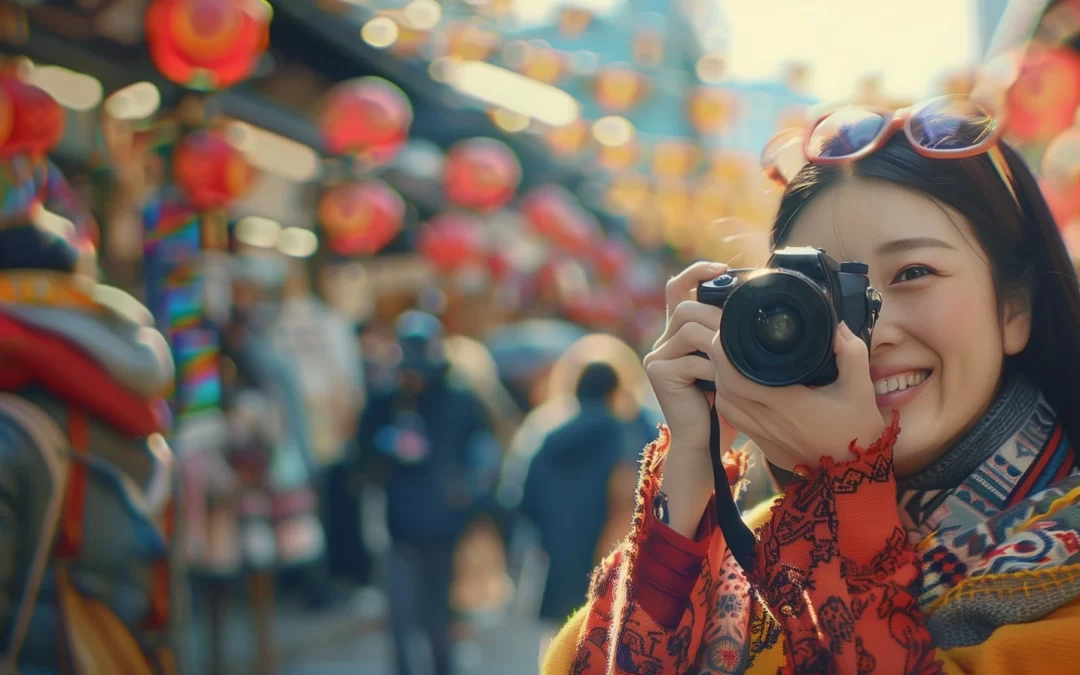
The 2026 Lunar New Year (Spring Festival) has sent a clear message to global investors: the Chinese consumer is not just “back”; they have evolved. While the massive, “bazooka-style” government stimulus many hoped for remains absent, the holiday data reveal a resilient, albeit highly selective, recovery driven by a pivot toward the experience economy. This pattern exemplifies China 2026 holiday spending trends, highlighting how consumers prioritize experiences over traditional goods.
From record-breaking rail travel to a surge in niche “scenic” destinations, the 2026 holiday period confirms that while Chinese shoppers are cautious about high-ticket goods, they are aggressively prioritizing memories, social connection, and “quiet vitality.”
Table of Contents
The Experience Surge: Why is Service Consumption Leading in 2026?
Navigating “Rational Deflation”: The Per-Trip Spend Reality
SEO & Strategy: How to Hire Chinese Influencers for the Experience Era?
The Policy Outlook: Targeted Easing over Mass Stimulus
The Experience Economy vs. Traditional Retail
The “Savings Wall” and Price Sensitivity
Key Strategies for Brands in 2026
Education and Talent: The Long-Term Play
The Experience Surge: Why is Service Consumption Leading in 2026?
For the first time in recent years, service-related spending has significantly decoupled from traditional retail goods, making competitive benchmarking essential for brands to track performance. As reported by CNBC and verified by the Hub of China’s (HoC) 2026 fieldwork, the “Quality of Life” index is the new benchmark for holiday success.
Key Performance Indicators:
- Travel Velocity: Rail travel hit a historic peak of 18.7 million passengers in a single day, signaling a mobile and active population.
- Niche Over Nature: Demand for remote, high-aesthetic locations like Altay (Xinjiang) and Pu’er (Yunnan) more than doubled.
- The Family Suite Trend: H World Group’s 2026 data shows a sharp rise in demand for “family-friendly” hotel configurations, emphasizing shared experiences over solo luxury.
Navigating “Rational Deflation”: The Per-Trip Spend Reality
Despite the volume of travel, a subtle but significant trend persists: price sensitivity. Our analysis shows that while more people are traveling, the average spending per tourist trip dipped slightly (0.2%) compared to 2025.
What This Means for Brands:
- Consumers are “trading up” in frequency and experience but “trading down” or “buying smart” in unit price.
- The Vouchers Effect: Local governments issued over 2.05 billion yuan in vouchers to “floor” demand.
- Selective Splurging: While overall spend per trip remains cautious, Hainan duty-free sales rose 30.8%, demonstrating that consumers will still spend heavily when the value proposition (zero-tariff luxury) is undeniable.
SEO & Strategy: How to Hire Chinese Influencers for the Experience Era?
In a market where “service weight” in the CPI is increasing, your marketing must follow suit. To capture the 2026 consumer, brands must move away from “product-only” ads and toward experience-led seeding.
Maximizing RED Influencer Marketing for “Experience Brands”
Xiaohongshu (RED) has become the “travel brochure” for the 2026 consumer. To rank on the first page of Chinese searches, brands should conduct in vivo research to understand authentic user behaviors and preferences.
- Focus on “The Vibe”: Hire influencers who can document the experience of using your product in a lifestyle setting (e.g., a luxury suitcase being used in a “Micro-Restoration” trip to Yunnan).
- Leverage Local Pride: In 2026, influencers who highlight regional authenticity and “New Chinese Style” (Xin Zhong Shi) are seeing the highest conversion rates.
Example in context: Using influencer campaigns to showcase micro-experiences is a key factor in shaping China 2026 holiday spending trends.
The Policy Outlook: Targeted Easing over Mass Stimulus
With the “Two Sessions” parliamentary meetings approaching in March 2026, the focus remains on “targeted, incremental easing.” “Beijing is prioritizing domestic demand by boosting income expectations rather than handing out cash.
The Hub of China Perspective:
“The 2026 recovery is structural, not cyclical. Brands waiting for a return to the 2019 ‘status-seeking’ splurge will be disappointed. Success now lies in identifying the specific ‘pockets of joy’ wellness, domestic travel, and social dining where Chinese consumers are still willing to open their wallets.” HoC Research Division
The Experience Economy vs. Traditional Retail
While China grapples with deflationary pressures and high debt, the services sector has emerged as a resilient growth driver, presenting new opportunities for marketing in China. Consumers are increasingly bypassing luxury “things” in favor of “emotionally rich journeys.”
- Theme Park Growth: Hotel bookings for theme parks during the 2026 Lunar New Year were double those of 2025.
- Travel Volume: Rail travel reached a record high of 18.7 million passengers in a single day during the holiday period.
- Cultural Resurgence: Demand for travel centered on traditional crafts, performances, and “New Chinese Style” (Xin Zhong Shi) experiences has seen a significant uptick.
The “Savings Wall” and Price Sensitivity
Despite the surge in travel, the Chinese consumer remains “budget cautious.” The “bazooka” stimulus investors expected has been replaced by targeted, incremental government support, such as consumption vouchers.
- Household Savings: Total household bank deposits reached a record 160 trillion yuan ($22 trillion) by mid-2025, a trend that has continued into 2026.
- Average Spending: While the number of trips is up, the average spend per tourist trip actually fell 0.2% compared to last year, signaling that consumers are seeking high-value, low-cost “micro-experiences.”
- The Gold Hedge: China remains the world’s leading driver of gold demand, with consumers increasingly buying physical gold as a hedge against economic volatility.
This selective, value-driven consumption is central to China’s 2026 holiday spending trends.
Key Strategies for Brands in 2026
To capture the 2026 consumer, brands must move beyond traditional “status” marketing and focus on experience-led seeding.
Education and Talent: The Long-Term Play
Parallel to the consumption shift, China is doubling down on its “talent dividend.” Beijing’s massive investment in STEM (Science, Technology, Engineering, and Mathematics) is reshaping the global competitive landscape.
- STEM Gap: Chinese STEM graduates now outnumber US graduates by more than eight to one.
- Talent Recruitment: The “Genius Program” now recruits 100,000 talented teenagers annually, fast-tracking them into elite research roles.
Conclusion
The 2026 Lunar New Year has proven that the Chinese consumer is active, mobile, and deeply invested in the experience economy. However, persistent “rational deflation” means that every yuan spent is scrutinized for its value-to-happiness ratio.
For international brands, the strategy is clear: be the experience, not just the product. Understanding China 2026 holiday spending trends is key to designing campaigns that resonate with this evolved, experience-driven consumer. Reach out today to start building your 2026 China experience strategy.
FAQs
Q1: What are the main drivers behind China 2026 holiday spending trends?
The key drivers include experience-driven travel, service consumption, niche scenic destinations, and selective spending backed by household savings and government vouchers.
Q2: How has Chinese consumer behavior shifted during the 2026 Lunar New Year?
Consumers are prioritizing experiences over traditional goods, focusing on memories, social connection, and family-friendly travel, core aspects of China 2026’s holiday spending trends.
Q3: Which sectors benefited most from the 2026 holiday spending trends in China?
Travel, hospitality, cultural tourism, and experiential services saw the strongest growth, highlighting the shift toward experience-led consumption.
Q4: How can brands leverage China 2026 holiday spending trends?
Brands should adopt experience-led marketing, use culturally authentic influencer campaigns, and target “pockets of joy” such as wellness, domestic travel, and social dining.
Q5: What role do government policies play in shaping China 2026 holiday spending trends?
Targeted easing measures, like consumption vouchers, support selective spending and encourage consumers to engage in experience-driven purchases despite cautious budgets.