
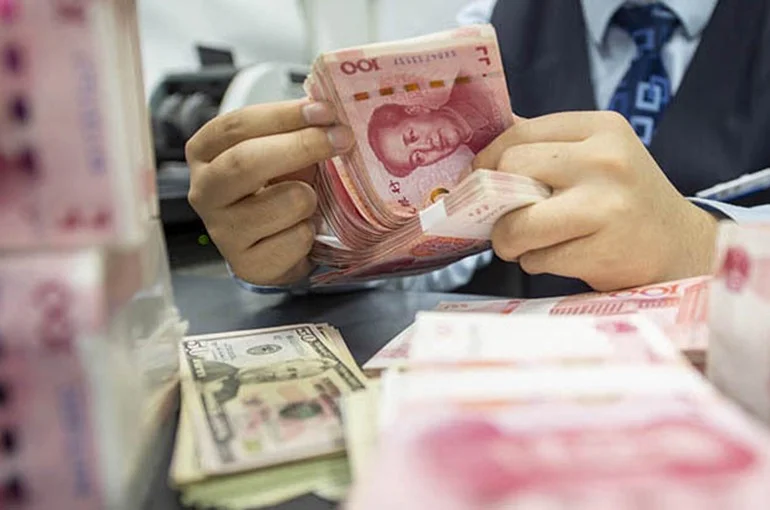
One of the least visible but most consequential consumer shifts in China right now is how people are mentally and practically separating their money. In the context of Chinese Money Identities, instead of treating income as a single pool, many consumers are creating distinct spending identities, each with its own rules, emotional purpose and limits. This is not classic budgeting. It is psychological compartmentalisation.
In recent research across Shanghai, Suzhou, and Qingdao, the Hub of China, consumers aged 26 to 45 rarely discussed saving versus spending. They talked about which money was allowed to be spent. One respondent explained it as different wallets for different versions of myself. Each wallet has permission for certain behaviours and prohibition for others.
Table of Contents
- Money is being assigned emotional roles
- Why is this emerging now?
- How does this change purchasing behaviour?
- What does this mean for brands?
- Closing reflection
- FAQs
Money is being assigned emotional roles
Consumers described ringfenced funds for specific emotional states. One account was for recovery spending, such as food delivery, small treats or taxis when tired. Another was for self-improvement, like courses, equipment or health checks. A third was explicitly labelled irresponsible money, used for impulse purchases without guilt, offering insights for the China Market Entry Strategy Service.
What matters is not the amount, but the framing. Once money is assigned a role, spending from it feels justified. This reduces internal conflict and post-purchase regret. Several participants said this system helped them spend more calmly, even if total spending did not decrease. This emotional structuring is central to the rise of Chinese Money Identities.
This behaviour is appearing across income levels, but is especially pronounced among middle-income urban consumers who feel pressure to be financially sensible while still wanting moments of freedom.
Why is this emerging now?
This trend reflects emotional fatigue more than financial anxiety. Consumers are tired of negotiating with themselves every time they spend. Ringfencing removes that negotiation by pre-approving behaviour in advance, a key finding in Consumer Research.
There is also a trust issue. Long-term financial planning feels abstract in an uncertain environment. Short-term control feels more reliable. By dividing money into smaller identities, consumers regain a sense of order even when the future feels unclear. This is a defining feature of Chinese Money Identities in 2026.
Digital payment systems make this easy. Multiple wallets, sub-accounts and platform-based balances allow separation without friction. What used to require effort now happens by default.
How does this change purchasing behaviour?
Ringfenced spending changes how consumers interact with brands. Purchases are evaluated not only on value, but on whether they fit the identity of the money being used. A product that feels indulgent may be rejected when viewed through a practical lens, but easily accepted if it aligns with a recovery or reward fund.
This helps explain why the same consumer can appear extremely frugal in one category and carefree in another. The logic is consistent internally, even if it looks contradictory externally, highlighting key insights for Market Analysis in China.
Hub of China research shows that consumers are more willing to try new brands when using designated exploratory funds. Risk feels contained. Failure does not spill into other parts of life. Within the framework of Chinese Money Identities, experimentation becomes psychologically safer.
What does this mean for brands?
Brands often assume consumers are making decisions from a single rational frame. That assumption is increasingly flawed. Products are now competing for access to specific mental wallets rather than the overall budget.
Clear positioning becomes critical. Is a product framed as relief, growth, efficiency or joy. Brands that straddle too many roles create confusion and are harder to place within a consumer’s internal system.
Pricing also plays a role. Products that clearly fit within a typical ringfenced amount perform better than those that sit awkwardly between categories.
Closing reflection
Chinese consumers in 2026 are not just managing money. They are managing themselves. Ringfenced spending is a way to bring emotional clarity to financial life. The rise of Chinese Money Identities shows that spending today is less about arithmetic and more about identity design.
For brands, the opportunity is not to persuade consumers to spend more, but to understand which version of the consumer they are speaking to. In a market where money now has personalities, relevance depends on knowing which one you are allowed to talk to.
Want deeper consumer insight research? Contact us today to explore strategic opportunities in China.
FAQs
- What are Chinese Money Identities?
Chinese Money Identities refer to the practice of mentally separating money into different emotional or functional categories rather than treating it as one unified pool.
2. Is this the same as traditional budgeting?
No, Traditional budgeting focuses on financial control, while this trend focuses on psychological permission and emotional framing.
3. Why is this trend growing in 2026?
It is driven more by emotional fatigue and uncertainty than pure financial stress. Consumers want simplified decision-making.
4. Does this behaviour reduce overall spending?
Not necessarily. Many consumers report feeling calmer about spending, even if total expenditure remains similar.
5. How should brands respond to this shift?
Brands should clearly define the emotional role their product plays and align pricing and messaging with specific mental spending categories.