
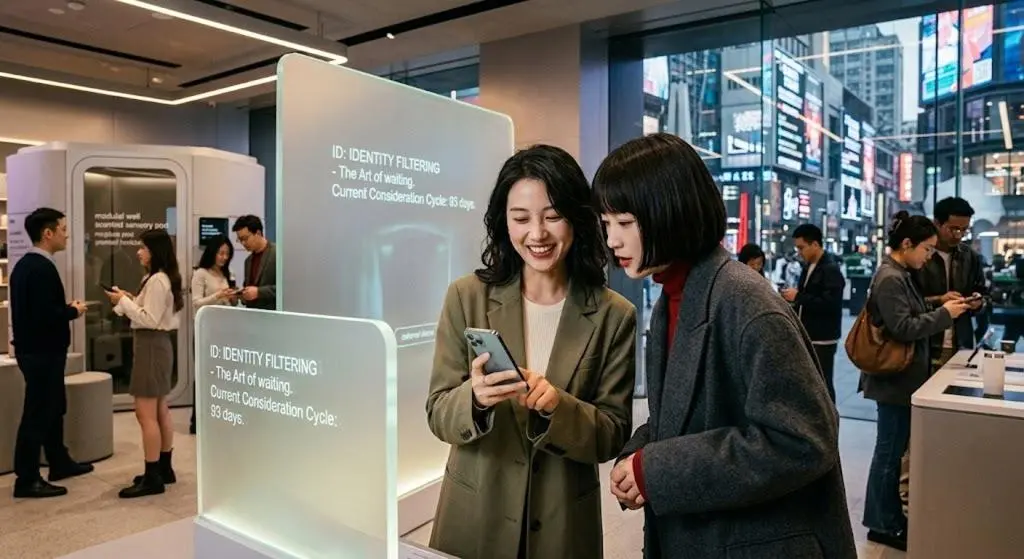
For decades, the “China consumer story” was defined by a monolithic rise in luxury goods and explosive urbanization. However, as we move through 2026, the narrative has fundamentally shifted. The modern Chinese shopper is no longer just buying products; they are curating a life.Understanding China’s 2026 Consumer Trends is crucial for international brands looking to remain relevant in this dynamic market.
Today’s landscape is defined by Rational Consumption, a profound pivot toward the Experience Economy, and a psychological phenomenon known as Deferred Desire. For international brands, “business as usual” is a recipe for irrelevance. To win in 2026, you must understand the subtle currents of emotional ROI and quality-driven frugality that now govern the world’s most dynamic market.
Table of Contents
The Rise of the Experience Economy: Service Over Stuff
Rational Consumption: “Buy Expensive, But Don’t Overpay”
Understanding “Deferred Desire”: The Hub of China Research
The Digital Frontier: Social Commerce and AI-Driven Influence
Conclusion: Adapting to the 2026 Reality
The Rise of the Experience Economy: Service Over Stuff
In 2026, we are witnessing a permanent recalibration of spending. Market analysis shows that while retail sales for traditional physical goods have stabilized at a modest growth of 3.6%, spending on services and experiences has surged by over 12%.
From Ownership to “Emotional ROI”
Chinese consumers, particularly Gen Z and Millennials, are increasingly viewing purchases through the lens of mental well-being and personal fulfillment. This isn’t just a “consumption downgrade”; it’s an upgrade in values.
Travel as a Necessity: Rail travel peaked at 18.7 million passengers in a single day during the recent Lunar New Year, highlighting a mobile population that prioritizes memories over material accumulation.
The “Self-Pleasing” Economy: The concept of Yue Ji (悦己) or “pleasing oneself” has moved from a niche trend to a primary purchase driver.
Rational Consumption: “Buy Expensive, But Don’t Overpay”
The 2026 consumer is the most informed in history. Armed with AI-driven comparison tools on platforms like Xiaohongshu and Douyin, they have mastered the art of “rational consumption.”
The New Value Equation: The phrase “Buy expensive, but don’t overpay” has become a national mantra. Consumers are willing to pay a premium, but only if that premium is justified by clinical data, ingredient transparency, or superior service.
Transparency is Non-Negotiable: Over 72% of urban consumers now check ingredient labels or clinical trial data before purchasing skincare or health products.
The Death of “Vague Equity”: Brands that rely on heritage alone without functional proof are losing market share to domestic “C-Beauty” and “C-Tech” champions that offer higher specs for better prices.
Understanding “Deferred Desire”: The Hub of China Research
Recent qualitative research has identified a counterintuitive trend: Deferred Desire. In 2026, wanting something is no longer a trigger for immediate action.
Why Consumers are Waiting?
Consumer research shows that consumers in tier-1 and tier-2 cities are deliberately holding items in digital wish lists for months, not out of poverty, but as a form of ‘identity filtration.’
Identity Fluidity: Shoppers are waiting to ensure a product aligns with their future self, leading to longer consideration cycles.
FOMO to JOMO: The “fear of missing out” has been replaced by the “joy of missing out,” as consumers feel empowered by their ability to resist algorithm-driven urgency.
Expert Insight: “In 2026, the brands that perform best are those that stay consistent in pricing and storytelling. High-pressure sales tactics are now seen as a sign of brand desperation.”
Sprinkling China’s 2026 Consumer Trends here helps highlight that Deferred Desire is a defining feature of the modern market.
The Digital Frontier: Social Commerce and AI-Driven Influence
By 2026, the line between content and commerce will have completely dissolved. Shopping isn’t a destination; it’s a seamless part of the social scroll.
Influencer Marketing 2026: From KOLs to KOCs
Strategy consulting indicates that the era of the ‘mega-influencer’ is waning. Success now belongs to Key Opinion Consumers (KOCs) and niche community leaders who offer relatability over perfection.
Authenticity Beats Size: Micro-communities are driving higher conversion rates than massive celebrity endorsements.
AI-Personalized Commerce: AI is now mainstream in the retail journey. From virtual skin analysis to predictive shopping carts, technology is used to reduce “choice fatigue” rather than just push more products.
Wellness as a Daily Ritual
Health is no longer a category; it is a filter applied to every purchase. In 2026, “wellness” influences everything from fashion (athleisure) to food (functional beverages) and home appliances (air purification).
Mental Health Matters: Nearly 60% of young people are willing to pay for products that provide emotional satisfaction or stress relief.
Organic Growth: Sales of green and organic food surged by 27.9% year-on-year, reflecting a long-term commitment to preventative health.
Conclusion: Adapting to the 2026 Reality
The Chinese consumer market of 2026 is complex, stratified, and deeply rewarding for brands that respect the intelligence of the consumer. The focus has shifted from volume to value and from goods to grace.
To succeed, international brands must:
- Prioritize Service: Infuse every product with an experiential layer.
- Prove Functional Value: Use data and transparency to justify price points.
- Patience is a Virtue: Design marketing for the “Deferred Desire” cycle rather than short-term spikes.
Embracing China’s 2026 consumer trends in every strategy is no longer optional; it’s essential for relevance and growth.
Contact us today to optimize your brand for China’s evolving consumer landscape.
FAQs
Q1: What defines the experience economy in China 2026?
The Experience Economy focuses on services, personal fulfillment, and emotional ROI over material goods, particularly among Gen Z and Millennials.
Q2: What is rational consumption in China 2026?
Rational consumption means paying a premium only when products offer verified quality, transparency, and functional value.
Q3: How does deferred desire impact buying behavior?
Consumers intentionally delay purchases to ensure products align with future identity, leading to longer consideration cycles.
Q4: What role will social commerce play in China in 2026?
Social commerce merges content and shopping, with AI tools and KOCs enabling personalized, seamless purchasing experiences.
Q5: Why will wellness be a key trend in China in 2026?
Wellness influences buying decisions across food, fashion, and home appliances, as consumers prioritize mental and physical health.