
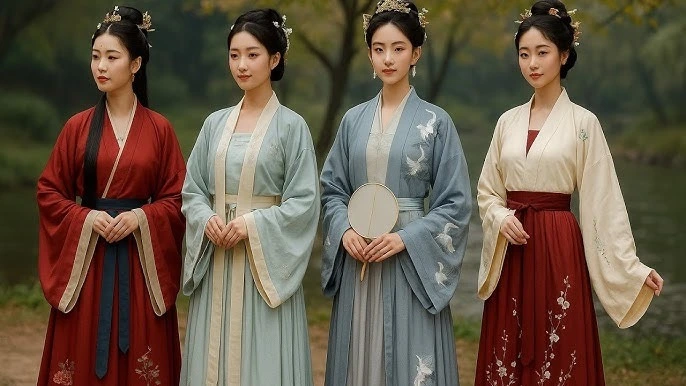
This Hanfu Revival is far from a fleeting fashion trend. It represents a deeper identity movement among Chinese youth, blending cultural heritage with social media visibility, group belonging, and even subtle protest against homogenized, Western-dominated fashion norms.
Who’s Wearing It and Why?
According to a recent China market research agency, Hub of China, which surveyed 612 consumers aged 18–30 in tier 1 and 2 cities, 38% of respondents said they had worn Hanfu in the last six months, double the proportion from just a year earlier. This insight highlights how a strong cultural shift is influencing fashion choices across younger generations.
Participants in Chinese focus groups conducted in Xi’an and Suzhou expressed that Hanfu makes them “feel rooted,” “soft but powerful,” and “more myself than jeans ever could.” For many, wearing it is a way of reconnecting with a cultural past that school textbooks barely explored.
On social media platforms like Xiaohongshu and Bilibili, the Hanfu Revival is thriving. From outfit reviews to historical explainers and group meet-ups, the digital ecosystem around Hanfu now spans commerce, education, and lifestyle storytelling.
A New Kind of Consumption
Unlike fast fashion, the Hanfu Revival economy prioritizes craftsmanship and cultural storytelling. Many brands are small, independent labels offering made-to-order pieces, with designs inspired by specific dynastic periods or Chinese literary works. This aligns with findings from ongoing market research in China, showing that young consumers value meaning and tradition behind products, not just aesthetics.
A mystery shopper exercise conducted by Hub of China, a leading market research company in China, across three Hanfu boutiques in Chengdu, found that customers expect more than just clothing; they seek experiences. Staff were expected to explain each garment’s story, curate music to match the era, and even provide in-store photography zones for social sharing.
What It Means for Brands
For domestic and international brands, the Hanfu Revival signals a growing desire among young Chinese consumers for emotionally rich, culturally rooted products. But jumping on the trend superficially is risky. This is where in-depth Chinese market research plays a crucial role.
Brands that succeed are those that demonstrate genuine understanding, perhaps through partnerships with traditional craftspeople, co-creating content with Hanfu influencers, or supporting community-led cultural events. Authenticity and cultural sensitivity matter greatly in this space.
Conclusion
The Hanfu Revival is not just a fashion trend; it’s a quiet cultural revolution. In a rapidly globalizing world, young Chinese consumers are choosing to stand out by looking inward. Fashion has become the medium, but identity is the message.
For brands and researchers alike, understanding this shift requires more than surface-level analysis. Working with a trusted China market research agency or conducting authentic market research in China can reveal the emotional depth and motivations driving this movement and open doors to meaningful engagement.